
Much has been said about the “blue tsunami” that struck the political landscape last night, given that voters outright rejected the Trump administration and handed Democrats both the House and the Senate.
Vice President JD Vance blamed the loss on voters opposing the war in Iran, suggesting that the conflict may not have been worth the cost of the midterm elections.
Voters, however, also signaled their interest in candidates outside of the political binary, and Florida showed signs of that last night.
Rep. Byron Donalds (R-FL), the governor-elect, narrowly won the election over David Jolly in a 50.02% to 48.71% race. Republicans also won all the statewide races, suggesting that Governor Ron DeSantis' legacy has a grip on the sunshine state for the time being.
Scott Jewett, the Libertarian candidate, noticeably received more votes than Hector Roos did in the 2022 gubernatorial election, signaling a growing rejection of the elephants and donkeys.
In 2022, Hector Roos received 19,299 votes, and Jewett scored 37,889 votes, a net increase of 18,590, and a percentage increase of 96.33% in votes.
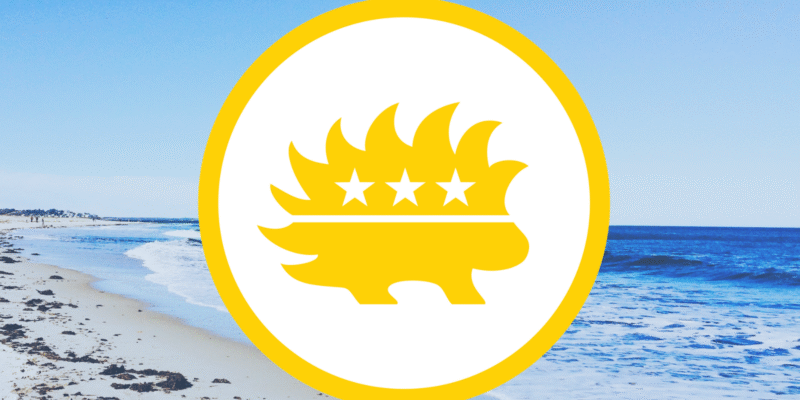
Despite the loss, Jewett says that he has no plans of leaving the political sphere, suggesting that the porcupine is looking to bulldoze its way into Florida politics.
During an interview on October 30th, 2026, Jewett put it simply, “Win or lose, we’re running again.’”
In speaking to his campaign team, he said, “For a couple of years, nothing happened in this campaign, and [my team] said, ‘We should’ve gotten it going earlier,’ and I asked, ‘Well, when do we start?’ and they said, ‘November 4.’”
“I’m gonna be either running for re-election or running for election a second time starting November 4,” Jewett affirmed.
A 2025 Gallup poll indicated that 62% of Americans back a third-party challenger against Republicans and Democrats. The same poll showed that 55% of Americans are “somewhat likely” to vote for a third-party candidate. Despite the percentages, only 15% are “very likely” to vote for a third-party candidate.
In a statement, Jewett stressed that, while the election is over, the work for a freer Florida continues.
“Florida can be a state where families keep more of what they earn, entrepreneurs can build without needless red tape, and reliable energy supports the next generation of growth,” he said. “Those ideas are bigger than any one campaign or any one party.”